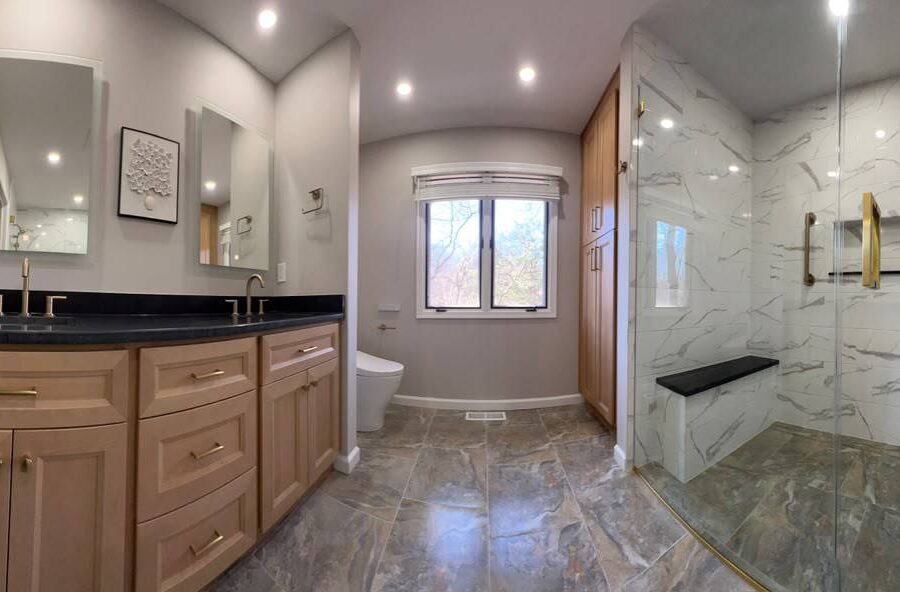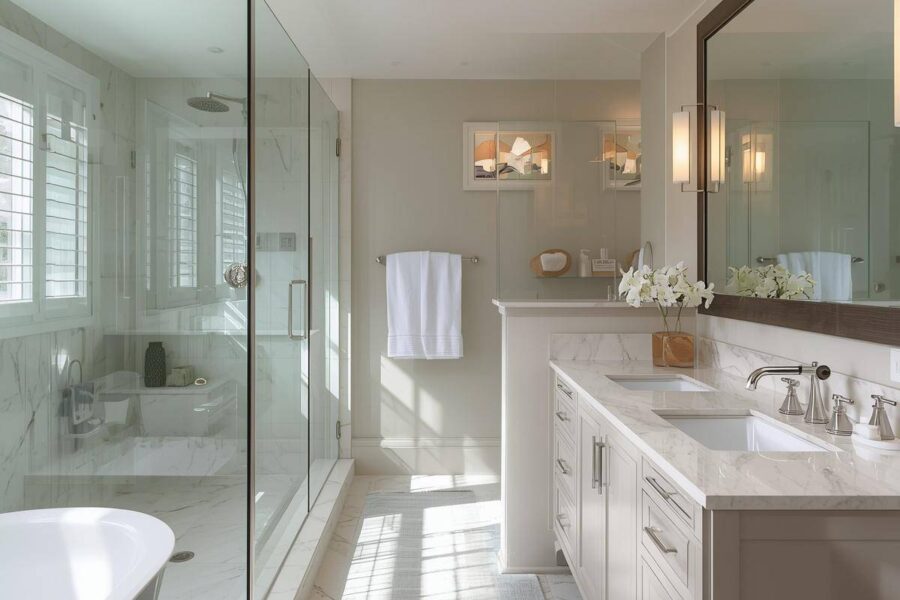

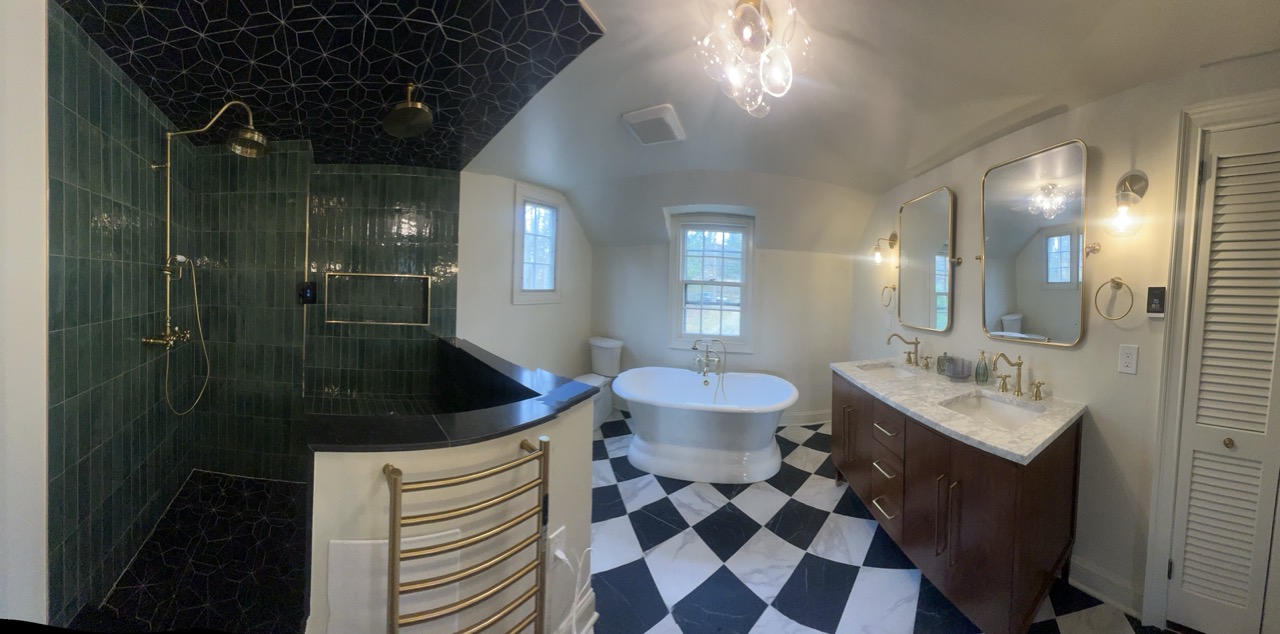

A bathroom remodel can change much more than the appearance of a room. It can make a cramped space easier to use, add storage where there was none, improve lighting, replace outdated fixtures, and make everyday routines more comfortable.
For homeowners in Bryn Mawr, PA and nearby Montgomery County communities, the challenge is often knowing where to begin. There are fixtures to select, layouts to consider, materials to compare, and practical construction details that may not be obvious when you’re simply looking at the finished design.
Before choosing your favorite tile or ordering a new vanity, take a step back and look at the bathroom as a complete space.
Here are five important areas to think through before your bathroom remodeling project gets underway.
🧭 1. Define What You Want Your Bathroom Remodel to Accomplish
Start with the problems, not the products.
Walk through your bathroom and make a list of what you would change if you could redesign the room.
Ask yourself:
✓ Is the existing layout difficult to use?
✓ Do you need more storage?
✓ Is the shower too small or difficult to access?
✓ Is the vanity providing enough usable space?
✓ Does the bathroom feel dark?
✓ Are the fixtures outdated or inefficient?
✓ Are there maintenance problems you’d like to eliminate?
✓ Do you want the bathroom to work better for your household in the years ahead?
These answers help establish the scope of your bathroom renovation.
A simple cosmetic update may involve new fixtures, paint, lighting, mirrors, or hardware. A more involved bathroom remodel could include a new shower, flooring, vanity, tile, plumbing changes, electrical work, or a completely different layout.
💡 Remodeling Tip: Separate your list into must-haves, improvements you’d like to make, and optional upgrades. This gives you a practical starting point when discussing your project and budget with a local remodeling company.
The goal isn’t simply to create a bathroom that looks modern. It’s to create a room that solves the problems you have with the existing space.
📐 2. Plan the Layout Before Choosing Fixtures
A beautiful vanity won’t improve a bathroom if it makes the room difficult to move through.
That’s why bathroom layout planning should come before major fixture selections.
Start by looking at the existing dimensions and the position of the:
- 🚪 Door and door swing
- 🪟 Windows
- 🚿 Shower or bathtub
- 🚽 Toilet
- 🚰 Vanity
- 🔌 Electrical outlets
- 💡 Lighting
- 🌬️ Exhaust fan
Then consider how the room is actually used.
Would a larger shower make more sense than the existing tub? Could changing the vanity size improve movement through the room? Would relocating a fixture create a meaningful improvement—or simply add unnecessary complexity?
Remember:
Changing the layout can affect more than the floor plan.
Moving plumbing fixtures may influence plumbing work, electrical requirements, flooring, walls, and the overall project scope.
For that reason, don’t purchase major fixtures based solely on how they look in a showroom or online.
📏 Measure first. Plan second. Purchase third.
A properly considered layout can make a small bathroom feel considerably more functional without physically increasing its size.
🗄️ 3. Build Storage Into the Design
Storage is one of those features homeowners often appreciate more after the remodel is finished.
A bathroom may look beautifully organized when it’s photographed for a design portfolio, but everyday life brings towels, toiletries, cleaning products, hair tools, and countless small items into the room.
Think about where these will go:
🧴 Toiletries
🧻 Toilet paper
🧺 Towels
💇 Hair tools
🧼 Cleaning supplies
🪥 Everyday personal-care products
Then consider storage that works with the available space.
Options may include:
✓ Deep vanity drawers
✓ Recessed medicine cabinets
✓ Shower niches
✓ Built-in shelving
✓ Linen cabinets
✓ Tall storage units
✓ Pull-out organizers
Storage doesn’t necessarily require adding bulky furniture.
A carefully designed vanity, recessed niche, or built-in cabinet can provide useful capacity while keeping the room visually clean.
💡 Design Tip: Think about what you reach for every morning and evening. The most frequently used items should be the easiest to access.
If you’re working with a smaller bathroom, thoughtful storage and layout decisions can have an especially noticeable effect.
💡 4. Choose Materials and Lighting for Everyday Use
Once the layout and storage strategy are established, you can begin thinking about the surfaces and visual details.
But don’t choose bathroom materials based on appearance alone.
Bathrooms deal with water, humidity, cleaning, temperature changes, and everyday wear, so materials should be selected with their environment in mind.
Consider these factors:
🧱 Flooring: durability, maintenance, moisture exposure and traction
🚿 Shower surfaces: water exposure, cleaning and long-term maintenance
🗄️ Cabinetry: storage needs, construction and finish durability
🪨 Countertops: appearance, cleaning and everyday use
🔩 Hardware: finish, durability and how it coordinates with other fixtures
🎨 Wall finishes: moisture exposure and overall design
Don’t forget lighting.
A bathroom needs more than attractive fixtures. It needs useful illumination.
A well-planned lighting scheme may combine:
- Ambient lighting → general illumination
- Task lighting → useful light around the vanity and mirror
- Accent lighting → visual interest and atmosphere
Your mirror, vanity, electrical outlets and lighting should be considered together rather than selected independently.
✨ The objective: Create a bathroom that looks good in photographs but also works well at 7 a.m. when you’re getting ready for the day.
💧 5. Don’t Overlook What Happens Behind the Finished Surfaces
Some of the most important parts of a bathroom remodel won’t be visible once the project is complete.
That’s particularly true in areas exposed to water.
🚿 Waterproofing
Tile is a finished surface, not a substitute for an appropriate waterproofing system.
The shower assembly needs proper attention to water management, transitions, drainage, and the surfaces behind the finished tile.
🌬️ Ventilation
Bathrooms produce considerable moisture through normal use.
An appropriately planned exhaust system can help manage humidity and reduce moisture-related problems.
Consider:
✓ Fan location
✓ Ventilation effectiveness
✓ Exhaust routing
✓ Noise level
✓ How the fan will be used
🔌 Plumbing and electrical
Changing the location of a shower, vanity, toilet, or other fixture can affect plumbing.
Likewise, adding lighting, outlets, heated features, or other electrical components requires planning before walls and finished surfaces are installed.
💡 Important: These behind-the-wall decisions are precisely why bathroom remodeling should be planned as a complete project rather than as a collection of individual product upgrades.
The finished tile may get most of the attention, but the systems underneath it contribute significantly to how the bathroom performs over time.
🏡 Plan Your Bathroom Around the Way You Live
A successful bathroom remodeling project isn’t simply about installing attractive fixtures. The finished room should make sense for the people who use it every day.
That means thinking about:
Layout → Storage → Materials → Lighting → Waterproofing → Ventilation → Function
When these elements are planned together, the result can be a bathroom that feels more comfortable, organized, practical, and visually cohesive.
For homeowners in Bryn Mawr, PA and surrounding Montgomery County communities, 215Mercury Kitchen & Bath Remodeling can help you turn ideas for your bathroom into a practical remodeling plan.
🔨 Ready to start planning?
Whether you’re updating an outdated bathroom, improving storage, changing the shower, or considering a more complete renovation, 215Mercury can help you explore your options and plan the next steps.
Call (215) 637-2879 or contact 215Mercury today to discuss your bathroom remodeling project.
💡 Want more bathroom remodeling ideas?
Explore our other bathroom remodeling resources for practical ideas, space-saving bathroom solutions, and tips to help you make informed decisions before starting your renovation.